
Fortis Aegis Advisory presents
Neuroscience of Phishing
How human emotions are exploited in cyberattacks with surgical precision
A work for professionals, companies and institutions that seek to understand the role of human behavior in cyber attacks and strengthen their awareness and prevention strategies.
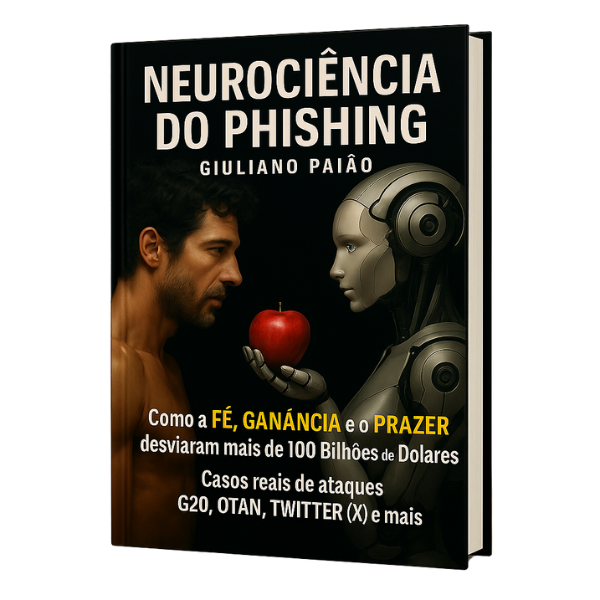
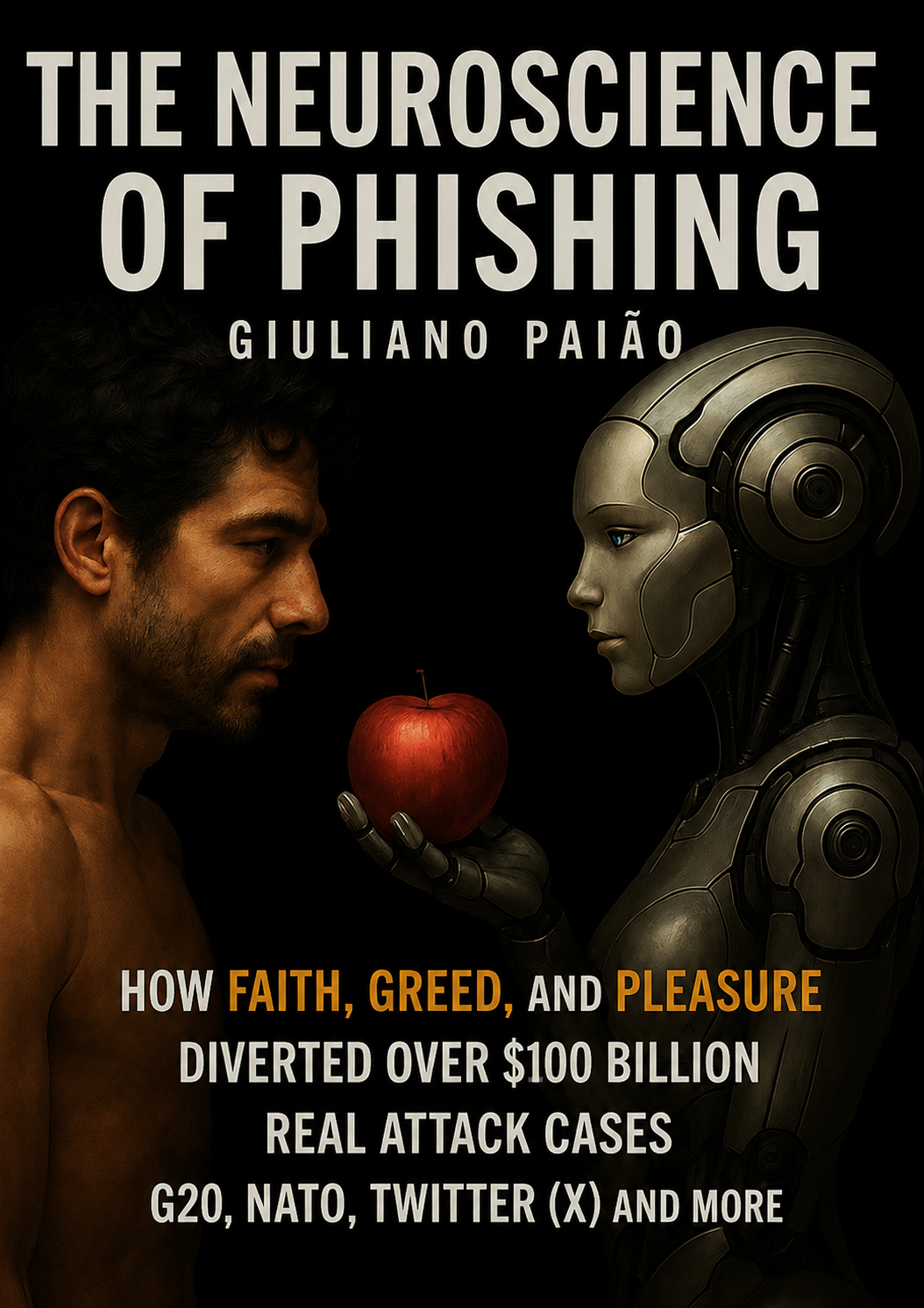
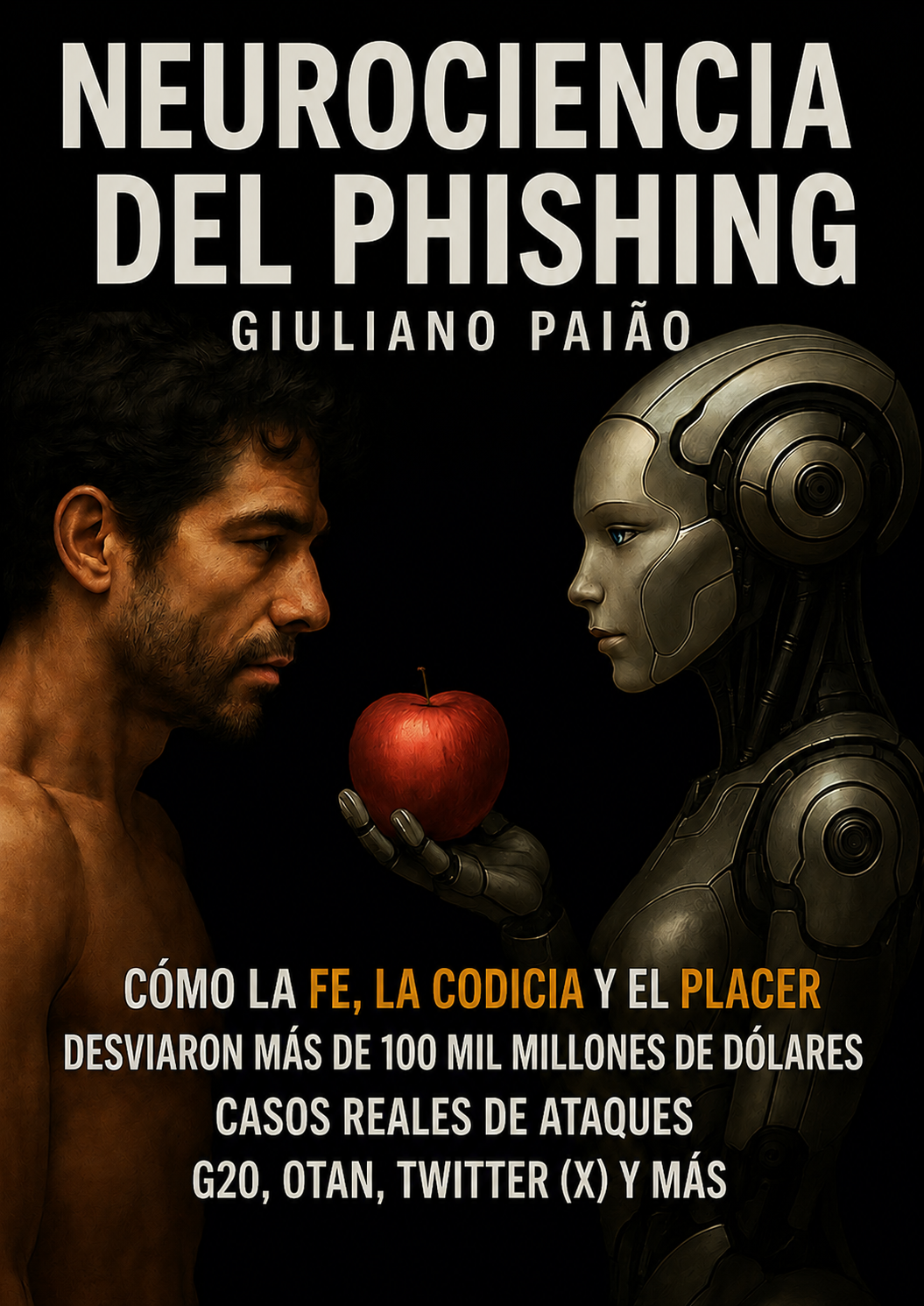


Applied neuroscience
Social engineering
About the work
What happens before the click?
A Fortis Aegis Advisory provides Neuroscience of Phishing, a work aimed at professionals, companies and institutions that seek to understand the role of human behavior in cyber attacks and strengthen their awareness and prevention strategies.
Written by our researcher, Giuliano Paião, the book brings together knowledge developed over years of practical experience in cybersecurity and continuous contact with real cases and scenarios.
The work explores the relationship between cybersecurity, human behavior and neuroscience, showing how emotions, cognitive biases and psychological triggers can be used to influence decisions, reduce critical thinking and transform human behavior into an attack surface — including in environments protected by MFA, firewalls, and other security technologies.
Technical and applied content
From science to controlled simulation.
Knowledge to understand the attack, recognize mechanisms of influence and develop more consistent human defenses.
Scientific studies
Fundamentals for understanding emotions, cognitive biases and the processes that influence decisions.
Real cases
Scenarios that demonstrate how psychological triggers are used in cyber attacks.
GoPhish and open source
Tools and methodologies to structure controlled phishing simulations.
Awareness
Application in corporate training, security programs and phishing exercises.
Practical application
A more prepared security culture.
With a technical and applied approach, the content brings together scientific studies, real cases, social engineering techniques, open source tools like GoPhish and methodologies for controlled phishing simulations.
The book can also be used as supporting material in corporate training, awareness programs and phishing exercises, assisting private companies, government institutions and other organizations in developing a security culture more prepared for threats based on social engineering.
More than understanding the techniques used in an attack, the proposal is to understand what happens before the click: which factors lead a person to trust, act urgently, ignore signs of risk or make a decision that they would not normally make.
Because behind many of the most sophisticated threats, there remains an essential element:
human behavior.
Open knowledge
Download the book for FREE.
Choose the language and download the desired version in PDF for free.
Portuguese83 pages · PDF · 1.0 MBDownload PDF
English74 pages · PDF · 7.4 MBDownload PDF
Spanish76 pages · PDF · 7.6 MBDownload PDF
Thai73 pages · PDF · 7.4 MBDownload PDF
Russian79 pages · PDF · 7.7 MBDownload PDF